An interview with AIMEN Technology Centre researchers on advancing additive manufacturing through data integration and standardization.
Contemporary European manufacturing enterprises face unprecedented computational and data management challenges in an increasingly complex global marketplace. The Pioneer Project, a significant EU Horizon initiative, addresses these critical manufacturing optimization challenges by developing an open innovation platform featuring an interoperable digital pipeline specifically designed for design-by-simulation optimization frameworks. In this interview, we speak with key researchers from AIMEN Technology Centre, PIONEER project coordinator, to understand how the project is revolutionizing the transition from design engineering to production, particularly in additive manufacturing applications.
The Vision: Connecting Two Different Worlds
Félix Vidal , Head of Smart Systems and Smart Manufacturing at AIMEN, explains the fundamental challenge that Pioneer addresses: “The goal is to help the transition from design engineering phase to the production. There are two very different domains, and Pioneer is trying to link them together, knowing the differences and special features from product design on one hand and from production on the other hand. We are using digital twins and Industry 4.0 methodologies, along with MODA/CHADA principles to bring in data from all domains and connect the different aspects of product development.” This challenge is particularly acute in additive manufacturing, where the complexity of transitioning from design to production can be overwhelming.
Pilar Rey Rodríguez, Senior Researcher at AIMEN, adds crucial context: “The core idea behind this project is to support the manufacturing of reliable products faster and at a lower cost by leveraging data from across the entire value chain. We’re creating datasets that integrate material, process, and monitoring information.”

Manufacturing First Time Right: The Ultimate Challenge
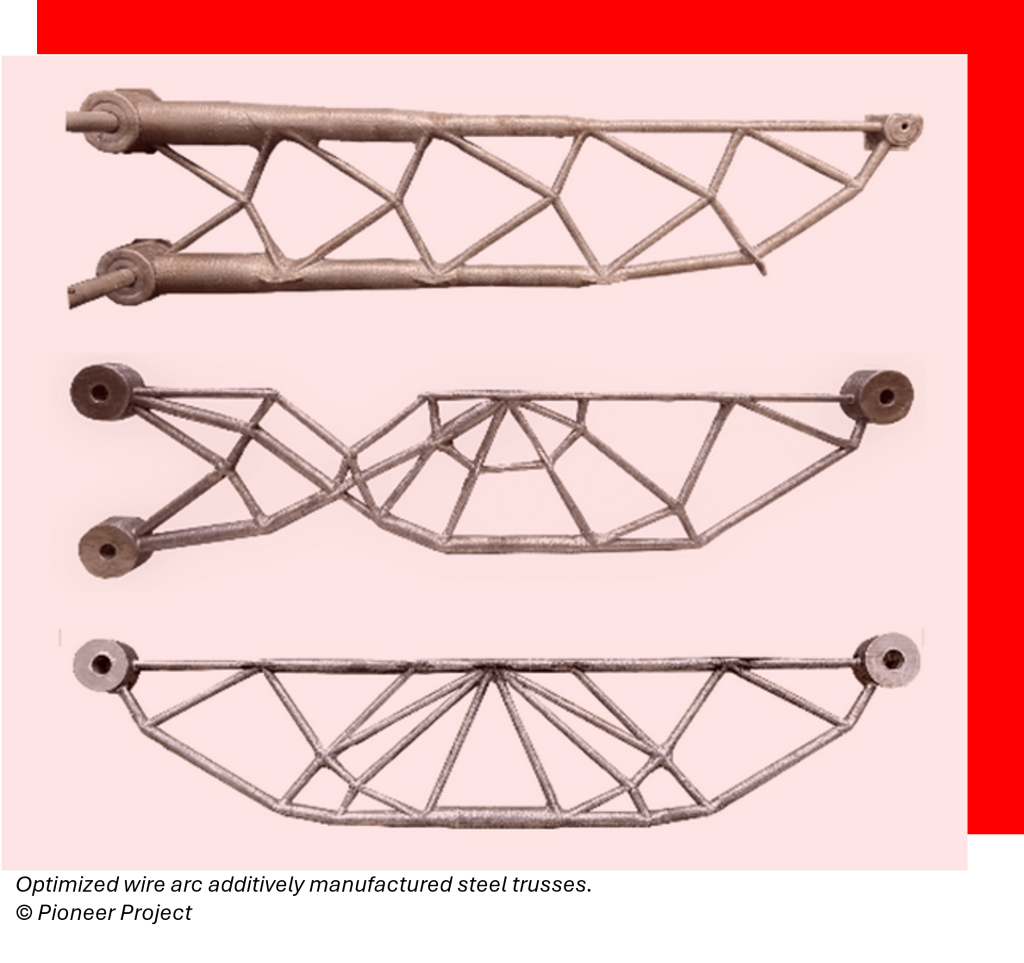
When discussing the challenges associated with both high and low volume production schemes, Félix identifies a critical success factor: “Manufacturing first time right.” This concept is particularly challenging in low-volume, one-of-a-kind production scenarios common in additive manufacturing.
Pilar provides insight from the materials perspective: “In low volume, and specifically in wire-arc additive manufacturing, the transition from designing something to being able to manufacture something is always tricky. It’s a complex process, and even when you think you’re going to fabricate something similar to what you fabricated months ago, it’s completely different because sometimes very slight differences in chemical composition or microstructure give you very different results.”
Lara Suárez Casabiell, AI Research Engineer at AIMEN, adds another dimension: “One of the biggest challenges is maintaining flexibility in the process without increasing complexity. Each product might require different simulations and data, and we need to ensure that all information has traceability and has been validated, which sometimes increases the complexity of the process.”
The Role of Simulation: From Prediction to Optimization
Simulation plays a crucial role in the Pioneer project, serving both predictive and optimization functions. Pilar explains their experience with Wire-Arc Additive Manufacturing (WAAM) simulations: “We have correlated quite well some results that we obtain from simulation software with data that we were able to extract from manufacturing and quality control. Thanks to tools that can represent 3D data from robot trajectories, cameras, and other peripherals, we can correlate these 3D representations with models extracted from simulation software.”
The simulation accuracy varies significantly based on material knowledge. As Félix notes: “For classical materials, getting the material properties needed for performing simulation models is easy. For other materials, this is an issue. Generally, you have two options: performing specific testing to get specific values, which is usually time-intensive and costly, or trying to look for alternatives from scientific publications.”
Data Interoperability and Standards: Building the Foundation for Integration
Data interoperability represents one of Pioneer’s most significant technical challenges. Félix outlines their approach: “We convert the design into different layer structures, then try to convert into a neutral format that is machine independent. This links trajectories with process parameters. Later, we convert the data into the specific machine format.”
Beyond technical interoperability, the project addresses semantic challenges. “We’re working on having a common dictionary and moving to ontologies, because different domains refer to different properties or aspects in different ways. If you have different partners working together, you need to build common understanding of the different information that you have to share.” Pilar emphasizes the software dimension: “In simulation, this kind of project is very multidisciplinary. You need a lot of inputs. If one partner uses one type of software and another uses a different type, it’s quite tricky to be aligned with a common objective. The more standardized and interoperable the data is, the better it is for research.”
The importance of standardization emerged as a central theme throughout the discussion. Pilar explains: “Standards ensure that you’re going to have a guide for something, ensuring that you’re going to do things with more quality and reliability.” She provides a practical example: “WAAM is the industrial name for directed energy deposition arc, or LMD is the industrial name for laser-based directed energy deposition. The standard names are not these names that a lot of people use. When you’re searching for these keywords, the result is going to be very different depending on your keywords, and standards can help in that way.”
VMAP Standard: Enabling Simulation and Data Connectivity
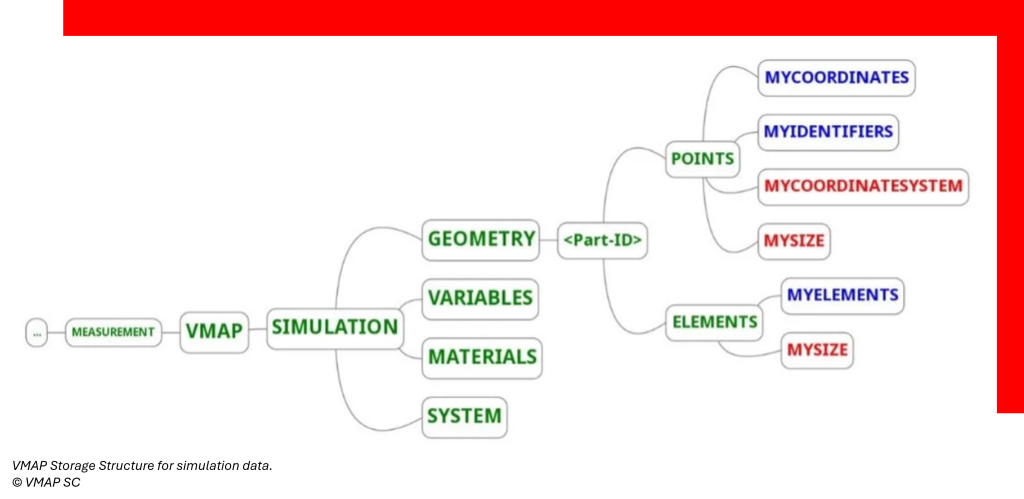
The discussion highlighted the specific role of the VMAP standard in addressing these challenges. Félix explains the connection: “At the end, what VMAP is trying to do is promote how to connect with different simulation models and also how to link information from different partners, from different software and from different tools in a common way. This is crucial, if you don’t have a common way, you cannot connect. You have to build your own tools to convert data into your specific data format, which means a lot of work for each tool or data that you need from external sources.”
The VMAP standard represents a significant step forward for both modelling and simulation standardization, as Félix notes: “For quality control, there are a lot of standards. If you work in inspection, you know for each inspection technique the standard you need to work with – ultrasound, radiography, magnetic testing. For modelling and simulation, there are initiatives like VMAP, and it is ongoing.”
From an AI perspective, Inés emphasizes: “Having standardized data is the key to start making anything in artificial intelligence and analytics in general. You need to compare things that have the same units and the same kind of information. You often lose a lot of time because the data is not standardized, and that’s always the first step in data analytics tasks.”
Industry Impact: Beyond Manufacturing Boundaries
The benefits of Pioneer’s approach extend across multiple industries. Félix sees broad applicability: “It’s quite generic, not specific to a sector or manufacturing process. I think especially those that have to work in low volume production will benefit mostly, because these are the sectors that have to think about product design in the engineering phase and how to move efficiently to production.”
Inés highlights benefits for researchers: “Researchers can use the tools developed in Pioneer, like, search for material data in different sources – papers, technical reports etc. The structured information converted to an international system of units for comparison can be quite useful for material science researchers.”
Looking Forward: The Path to Implementation
As Pioneer approaches its final phase, the team reflects on the complexity of bridging multiple domains. Félix concludes: “The project is quite complex. We’re trying to connect multiple domains – design, engineering, production, and data-driven approaches. All of us speak very different languages, and this is reflected in the complexity of this project.”
The Pioneer Project represents more than just a technological advancement; it’s a fundamental shift towards integrated, data-driven manufacturing that preserves domain expertise while enabling unprecedented collaboration. For the manufacturing industry, particularly in additive manufacturing, Pioneer’s approach offers a roadmap for navigating the increasing complexity of modern production while maintaining the quality and reliability that markets demand.
As Pilar aptly summarizes: “Sometimes it’s more important to standardize a methodology more than the data itself. The methodology is very important, once you document quite well how you’re doing things, it is often enough. Reliable and replicable data is the key to research.”
______________________________________________________________________________
The Pioneer Project continues to develop innovative solutions for manufacturing optimization, with results expected to benefit industries ranging from construction to automotive applications. For more information about the Pioneer Project and its outcomes, visit the project website or contact the VMAP SC.
July, 2024
ITEA interviewed Fraunhofer SCAI colleagues about inclusivity and diversity within ITEA community. Read the article here…
19.06.2024
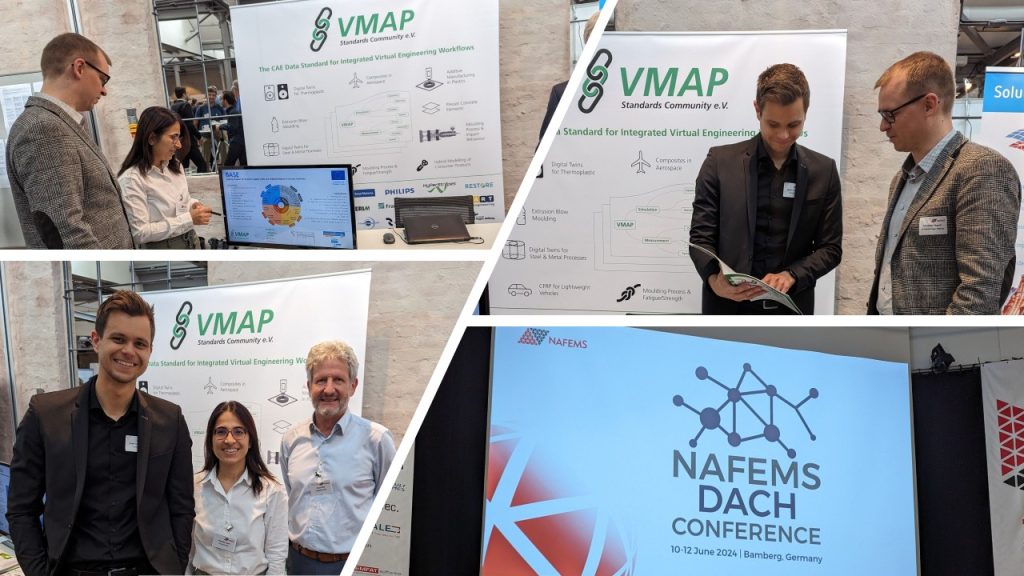
The NAFEMS DACH Conference 2024 was held from 10-12 June 2024 in the Bavarian city Bamberg. The old town of Bamberg is known for the many timber houses and has been UNESCO world Heritage site since 1993.
The conference was attended by many of the software vendors from DACH region and saw sessions from ‘AI ready’ in Engineering to the growing demand for SPDM (Simulation Process and Data Management) in the industry. Many of the software vendors also presented their tools and had booths to interact with the engineers at site.
VMAP SC hosted the VMAP Workshop to talk about the standard and show the latest developments. After a short introduction by the Chairperson Klaus Wolf and a technical description by marketing manager Priyanka Gulati, use cases were presented in detail. Victor Lüddemann from Fraunhofer SCAI presented the implementation of measurement data in VMAP Standard and demonstrated the use of tracker files offered by the VMAP Standard. Alexander Busch from Dr Reinold Hagen-Stiftung talked about the blow forming use case and showed the increased efficiency of workflows using the standard. Finally, Andreas Schuster from DLR provided an over of the Ultrasonic guided waves structural health monitoring and showed, how the standard is sup-porting the work at DLR for the simulation of aerospace components.
VMAP SC was also represented at the VMAP Stand, which was visited by many of the engineer coming from automotive industry, suppliers, simulation service experts and software vendors.
The event was an excellent platform to talk about the potential applications of the standard and to draw the attention of industry users and service providers to the work of the VMAP SC. As part of the SPDM workshops, ‘open data formats for the use of AI’ was a topic in a panel discussion with experts from Hexagon, Scale, PDTec, GNS, Digital Physics AI, Porsche, and VW. VMAP offers itself as a solution here – old data records can be transferred to the open format via VMAP converters and new simulation runs can export directly to VMAP. In addition to an open data standard, the urgent need for a uniform definition of meta-information was also expressed several times: meta-information must be created uniformly for the results of simulation runs and of phys-ical measurement campaigns so that consistent analysis or machine learning can later take place using these meta-data. These discussions showed that there is a huge demand from the industry to standardize the simulation data, such that it can be effectively used by AI/Analytics tools to carry out predictive analysis. The road forward for the industry requires an open and vendor-neutral standard and VMAP is strong candidate with great potential to support these demands.
11.04.2024
The final review of the VMAP Analytics project, a follow-up of the VMAP Project, was held in an online/hybrid format on the 9th of April 2024. The review was hosted by the project leader, Swerim AB from Sweden. Ovako, Gränges, Prevas, Morgårdshammar, Gemit, from Sweden, and Fraunhofer SCAI, from Germany, also attended the review. JF. Lavignon and E. Roddenbach from ITEA Office, S. Liljeblad, an ITAC representative, external reviewers from Software AG (GER) and Bittium (FIN) and the project mentor R. Ionescu from NXP (ROM) were also part of the review.
The partners presented the initial overview of the project and the achieved KPIs. This was followed by use case specific presentations.
Ovako, with a focus on three different domains, Tube Mill, Steel Mill and Rolling Mill in cooperation with Morgårdshammar presented the benefits achieved from the data analytics – increased knowledge of the process to get it first-time-right and a better control of the processes.
Prevas use case focussed on the optimization of furnace, and their goal was to create a digital twin of the furnace to verify their tool called, FOCS (Furnace Optimization Control System). The knowledge gathered during the project will help them to include view factor modelling in furnace control systems. The improved FOCS will provide further energy savings in this sector.
Gränges use case about hot rolling profile came with its own challenges of differences in thickness along the width of the profile and effects from unknown parameters. These problems were addressed with a tailored Crown model integrated in aCurve tool. This innovation will offer a quick calculation of reverse rolling mill and 2-stand tandem mill at the Gränges server. This approach of the Crown model can be applied to any alloy once the respective material constitutive model is available.
Fraunhofer SCAI presented the use case on blow forming and integration of the measure data into the workflow chain. The method and strategy to store measurement data like sensor data, raw image data and processed image data was developed and the extended version of the VMAP Standard was demonstrated. The extended VMAP Standard with the storage methods for measurement data can be applied to other use cases with similar demands.
Gemit and Swerim also presented their contributions with respect to each use case. Their efforts towards data understanding, data collection and data analytics were largely responsible for achieving in-depth insights into the first three use cases.
The review meeting was summarised with a quick overview of the dissemination activities carried out by all partners and the VMAP SC e.V.. Priyanka Gulati from Fraunhofer SCAI presented the ongoing workings of the VMAP SC and the latest event ‘VMAP User Meeting 2024’ hosted by the community.
The reviewers were pleased with the various achievements of the project, and they appreciated all the partners for good communication and cooperation. Particularly, they appreciated the efforts of the VMAP SC in continuing the standardization activities even after the end of VMAP Project in 2020. Since, development of the digital twin for such complex industrial use cases is a daunting task and the reviewers acknowledged the efforts made by the project consortium. This project marks the beginning of the next step, where quantitative KPIs need to be derived from the project results. These can then motivate industrial partners to work towards the development of digital twins.
15.04.2024
The 69th edition of the NAFEMS online magazine reported on the success of the VMAP User Meeting – “1. VMAP-Anwendertreffen 2024
– eine Erfolgsgeschichte”
14.03.2024
The Automotive Solution Center for Simulation e.V. (https://asc-s.de/en/) is a non-profit association for know-how carriers in the field of automotive simulation. The asc(s provides its members with the possibility to advance new simulation methods for the virtual vehicle development fast and efficiently – particularly if these place high demands on the computing power, data volume and data analytics.
simpulsedays are an integral part of the asc(s culture. They are intended to present latest technologies, discuss new solutions for future challenges, to explore potentials and to agree on cooperations. On March 14, 2024 asc(s organised a simpulseday on “Computational Mechanics for Progressive Vehicle Bodies”, where Klaus Wolf (VMAP SC) presented the recent concepts and developments on “The VMAP Data Standard for Simulation and Measurement”. In a subsequent discussion round, the workshop participants then had the opportunity to discuss specific issues relating to VMAP in detail and record them in short statements.
01.12.2023
Web article by ITEA4
November 14-16, 2023
Futher development of the standard to support the data from real measurements and machine monitoring will be presented. With these enhancements, data from the virtual design can be compared directly with data from physical measurements and product runs.
May 14-18, 2023
VMAP SC has organised a workshop on the upcoming NAFEMS World Congress. The aim of this workshop is to discuss the needs and possibilities of such extensions together with user experts from different industry sectors and developers from software companies.
A short introductory lecture on the VMAP standard as well as short presentations on each of the extensions discussed will serve as a stimulus for an open technical discussion among all participants involved. The workshop will be open for any interested party and engineer.
20.12.2022
In December 2022 sixteen founding members – partially coming from the initial ITEA project – established the VMAP Standards Community. VMAP SC will be open to all, who intend to contribute to the VMAP Standard and its extension, thereof.
The Association bears the name „VMAP Standards Community e.V.“, abbreviated as “VMAP SC”. The Association will be entered into the official register of Associations. The registered office of the Association shall be in Sankt Augustin, Germany.
05.10.2022
The VMAP Standard for Vendor-Neutral CAE Data Storage – Workshop on Technical Extensions and Industrial Use Cases
- Introduction
- K. Wolf, P. Gulati (Fraunhofer SCAI)
- First Proposal to Handle Sensor Data in VMAP
- VMAP Standards Community
- Full Model Storage in VMAP
- VMAP Standards Community
- VMAP-Analytics – A Smart Manufacturing Platform
- S. Palla, K. Ekström, J. Lindwall, P. Darth,
- C. Luo, S. Marth, T. Schwartz (Swerim AB)
- Open Discussion
27.04.2022
This webinar aims to inform the sector of the progress achieved over the last 12 months.
- Introduction & Welcome [NAFEMS, 5 min]
- VMAP SC: Legal association timeline and organisation
- [Fraunhofer SCAI, 5 min]
- VMAP Standard: Technical Overview and Updates
- [Fraunhofer SCAI, 10 min]
- VMAP Standard: Technical Working Groups [Robert Bosch, 10 min]
- Associated Projects [Fraunhofer SCAI, 20 min]
- VMAP Analytics [SWERIM] – VMAP analytics drives industrial manufacturing using Smart digital twins.
- LeBeDigital [BAM] – Life cycle of concrete: ontology development for the concrete production process chain.
- German Aerospace Center [DLR] – Integrating the VMAP Standard in their in-house solver.
- Q&A [NAFEMS, 10 min]
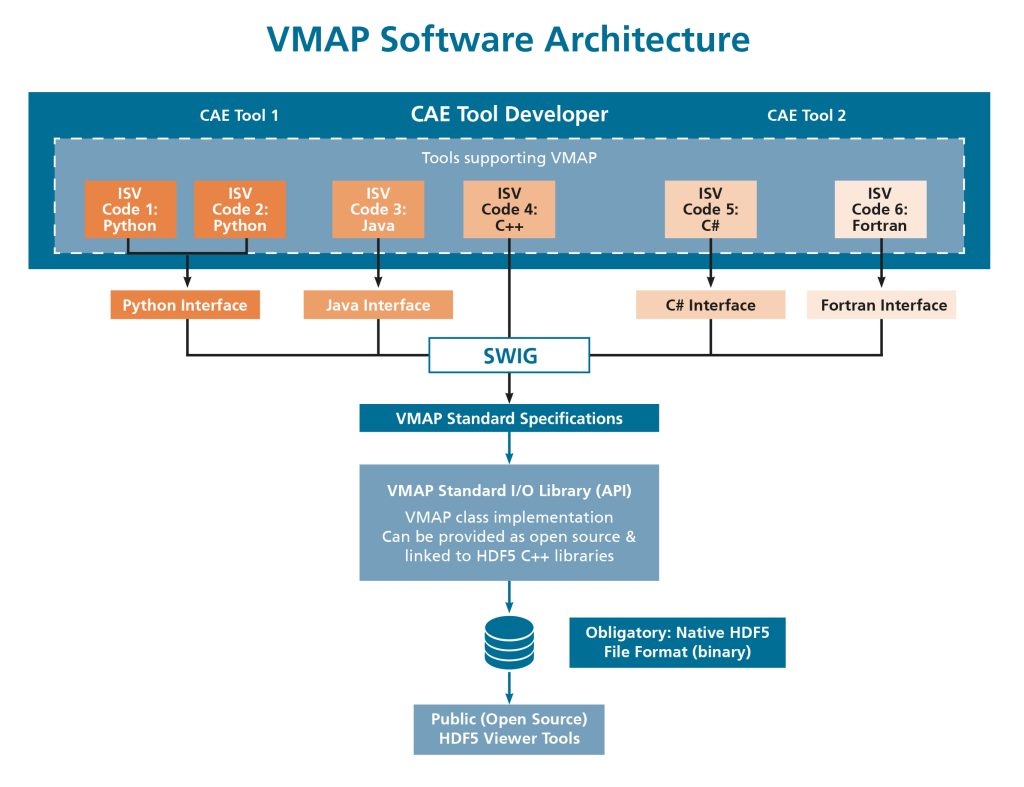
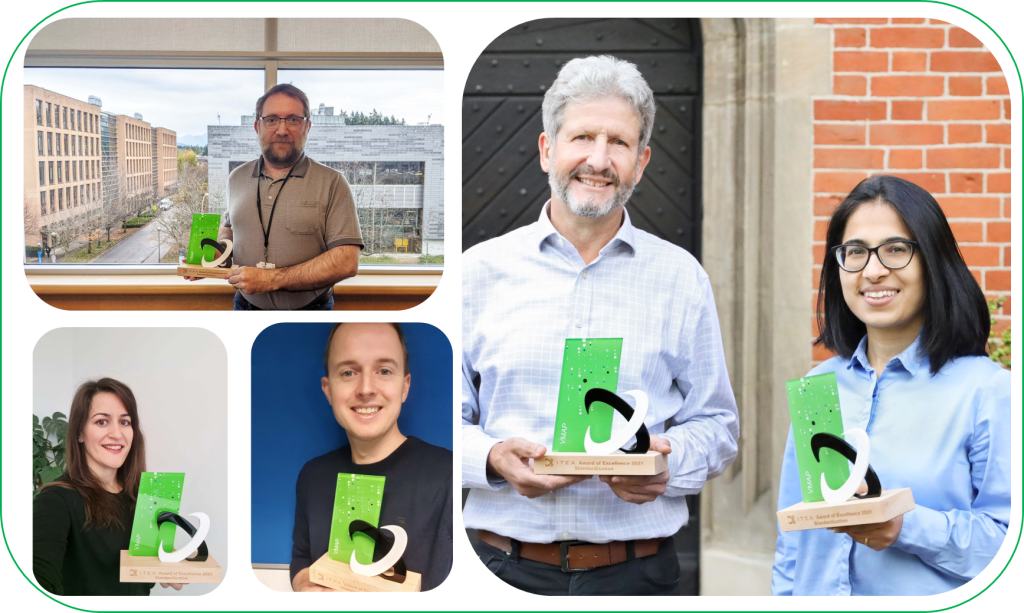
EUREKA’s R&D&I cluster, ITEA, honoured the VMAP project for outstanding results in the field of standardization with the “ITEA Award of Excellence for Standardization”. The international project has succeeded in developing a vendor-neutral standard for the storage and transfer of data in Computer Aided Engineering (CAE). The VMAP standard improves interoperability in virtual engineering workflows and is already being used by many companies.
The ability to carry forward result data from one simulation step to another in a Computer-Aided Engineering (CAE) software workflow has always been dependent on customised data transfer solutions, which requires a huge effort in terms of time and money.
The VMAP Project only represents the tip of the ice-berg. The VMAP SC intends to take this forward by advancing the standard in other multiphysics domains.
The VMAP Project team was recognized by ITEA for its tremendous effort & dedication.
March 2020
ITEA Vice-chairman Philippe Letellier et al.
Web article
29.01.2020
Web article by K-ZEITUNG online
Contributions by SIMCON.
20.10.2020
Transvalor carried out a case study with Faurecia Automotive Seating, who assembles lightweight components by laser welding for the manufacture of automotive seats.
This study illustrates the potential gains associated with the new VMAP exchange format, including the simplification of operations chaining between “process” simulation and “crash” simulation. In the end, the standard VMAP exchange format is intended to be more efficient because it is more compact and very well documented, with the ultimate guarantee of strong interoperability for a wide range of CAE software.
More details here.